Research Lab
Acoustic Robotics for
Life Sciences & Healthcare
Advancing micro- and nano-robotics through ultrasound-driven innovation. We bridge engineering and medicine to enable minimally invasive technologies.
Welcome to the Acoustic Robotics Systems Lab
Featured
Publications
Reconfigurable Acoustic Printing for Conformal and Minimally Invasive Repair
Chaochao Sun, Zhen Li, Amr Osman, Yingqiang Wang, Hanyang Yu, Wanying Wang, Zhen Yu, Yunhu He, Yuhan Chen, Xuliang Chen, Zhengyi Mao, Ying Li, Yuanchao Liu, Mulin Miao, Yulong Wang, Daniel Ahmed and Jian Lu
Minimally invasive tissue repair is essential in reconstructive and orthopedic surgery to reduce infection and scarring. However, current 3D/4D printing and stimulus‐responsive materials remain constrained by the need for larger incisions and limited penetration of light and heat stimuli. Here, reconfigurable acoustic printing (RAP), a platform that harnesses focused acoustic waves to enable remote printing, healing, and shape reconfiguration with centimeter‐scale penetration depths through biological tissue, is introduced. By using a specially formulated bioacoustic ink, RAP achieves high‐resolution transcutaneous solidification and reconfigurable shape morphing, inspired by origami principles. Acoustic stimulation further induces controlled material softening, allowing precise structural repair and localized reconfiguration. In live animal models, RAP successfully demonstrates in vivo transcutaneous printing and conformable defect repair. This strategy establishes a versatile and powerful approach for minimally invasive biomedical applications, spanning tissue engineering, implant repair, and aesthetic medicine.
Minimally invasive tissue repair is essential in reconstructive and orthopedic surgery to reduce infection and scarring. However, current 3D/4D printing and stimulus‐responsive materials remain constrained by the need for larger incisions and limited penetration of light and heat stimuli. Here, reconfigurable acoustic printing (RAP), a platform that harnesses focused acoustic waves to enable remote printing, […]
Chaochao Sun, Zhen Li, Amr Osman, Yingqiang Wang, Hanyang Yu, Wanying Wang, Zhen Yu, Yunhu He, Yuhan Chen, Xuliang Chen, Zhengyi Mao, Ying Li, Yuanchao Liu, Mulin Miao, Yulong Wang, Daniel Ahmed and Jian Lu
Ultrasound-driven programmable artificial muscles
Zhan Shi, Zhiyuan Zhang, Justus Schnermann, Stephan C.F. Neuhauss, Nitesh Nama, Raphael Wittkowski and Daniel Ahmed
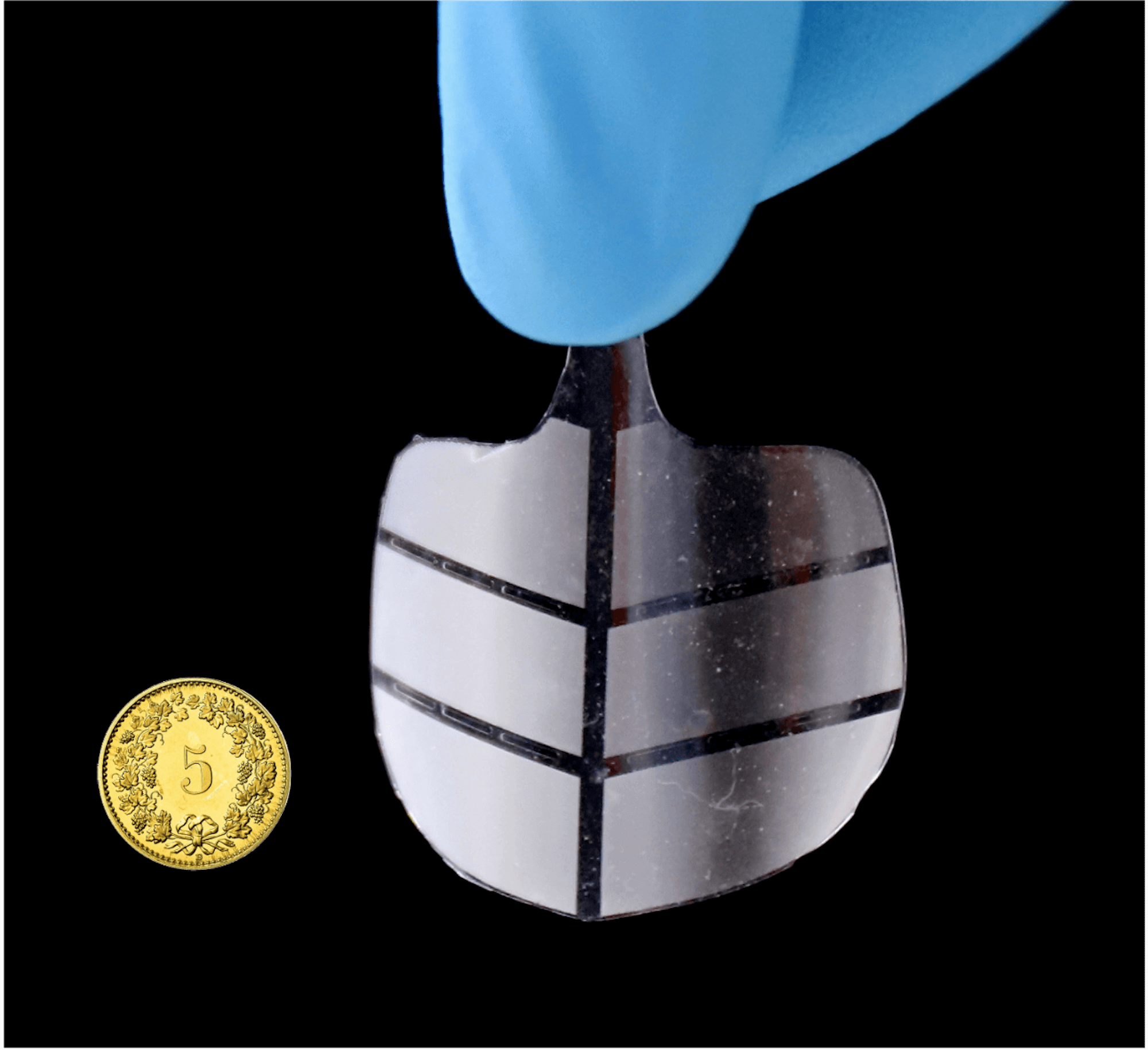
Muscular systems1, the fundamental components of mobility in animals, have sparked innovations across technological and medical fields2,3. Yet artificial muscles suffer from dynamic programmability, scalability and responsiveness owing to complex actuation mechanisms and demanding material requirements. Here we introduce a design paradigm for artificial muscles, utilizing more than 10,000 microbubbles with targeted ultrasound activation. These microbubbles are engineered with precise dimensions that correspond to distinct resonance frequencies. When stimulated by a sweeping-frequency ultrasound, microbubble arrays in the artificial muscle undergo selective oscillations and generate distributed point thrusts, enabling the muscle to achieve programmable deformation with remarkable attributes: a high compactness of approximately 3,000 microbubbles per mm2, a low weight of 0.047 mg mm−2, a substantial force intensity of approximately 7.6 μN mm−2 and fast response (sub-100 ms during gripping). Moreover, they offer good scalability (from micrometre to centimetre scale), exceptional compliance and many degrees of freedom. We support our approach with a theoretical model and demonstrate applications spanning flexible organism manipulation, conformable robotic skins for adding mobility to static objects and conformally attaching to ex vivo porcine organs, and biomimetic stingraybots for propulsion within ex vivo biological environments. The customizable artificial muscles could offer both immediate and long-term impact on soft robotics, wearable technologies, haptics and biomedical instrumentation.
Ultrasound-driven programmable artificial muscles
Muscular systems1, the fundamental components of mobility in animals, have sparked innovations across technological and medical fields2,3. Yet artificial muscles suffer from dynamic programmability, scalability and responsiveness owing to complex actuation mechanisms and demanding material requirements. Here we introduce a design paradigm for artificial muscles, utilizing more than 10,000 microbubbles with targeted ultrasound activation. These […]
Ultrasound-induced Particle Dynamics in Pathological Vascular Vortices
Mahmoud Medany, Nitesh Nama and Daniel Ahmed
Disturbed flow is a hallmark of diseased vasculature, yet its influence on particle behavior under external actuation remains poorly understood. We uncover distinct behaviors of microparticles under disturbed flow when exposed to ultrasound, revealing selective trapping and aggregation phenomena that differ fundamentally between soft and rigid particles. Using microfluidic models of disturbed vascular flow, we show that microbubbles become trapped at the eye of vortices and self-assemble via ultrasound-induced forces. As clusters grow to a critical size, they are ejected and adhere to the wall opposite the ultrasound source, forming nuclei that progressively occupy aneurysm cavities—a mechanism that could enable targeted, noninvasive treatment. These findings reveal an unexplored interplay between ultrasound and hydrodynamic forces, offering a new strategy for ultrasound-guided therapeutic delivery in vascular disease.
Mahmoud Medany, Nitesh Nama and Daniel Ahmed
Disturbed flow is a hallmark of diseased vasculature, yet its influence on particle behavior under external actuation remains poorly understood. We uncover distinct behaviors of microparticles under disturbed flow when exposed to ultrasound, revealing selective trapping and aggregation phenomena that differ fundamentally between soft and rigid particles. Using microfluidic models of disturbed vascular flow, we […]
Bioinspired Geometry-Encoded Rheotactic Navigation of Sound-Driven Microrobots
Chaochao Sun, Adrian Paskert, Yong Deng, Mahmoud Medany, Raphael Wittkowski and Daniel Ahmed
Imitating the shape-encoded tactics of natural microswimmers—organisms that flip, roll, and rheotaxis through viscous fluids—could transform microfluidics, micromanufacturing, and targeted therapy. However, translating those geometric navigation cues into actively driven microrobots is an open, largely unexplored challenge. Here, inspired by the structure of sperm cells, we introduce a sound-propelled head-helix microparticle (“microrobot”) featuring an elliptical head and a spiral tail. This asymmetrical design interacts with the incident acoustic field, generating complex secondary flows that induce a torque, enabling the particle to reorient around its cross-section. The microparticle exhibits a preferred direction of propulsion and orientation when exposed to a traveling sound wave, reorienting if its initial alignment deviates from this preference. Both the preferred direction and orientation can be modulated by adjusting the sound frequency, and they further adapt to background flow fields in the environment. Furthermore, the microparticle exhibits rheotaxis-like motion, exhibiting wall-following motion with frequency-dependent sliding behavior. By moving towards the channel wall, it enters the region with the smallest flow velocities, allowing it to move antiparallel to the fluid. These findings contribute to the engineering of the trajectories of sound-propelled microparticles and to the development of next-generation microrobots for medical and other innovative applications.
Chaochao Sun, Adrian Paskert, Yong Deng, Mahmoud Medany, Raphael Wittkowski and Daniel Ahmed
Imitating the shape-encoded tactics of natural microswimmers—organisms that flip, roll, and rheotaxis through viscous fluids—could transform microfluidics, micromanufacturing, and targeted therapy. However, translating those geometric navigation cues into actively driven microrobots is an open, largely unexplored challenge. Here, inspired by the structure of sperm cells, we introduce a sound-propelled head-helix microparticle (“microrobot”) featuring an elliptical […]
Bio-Inspired Ultrasound-Driven Ultrafast Soft Microgripper
Chengxi Zhong, Vincent Winderol, Khemraj Gautam Kshetri, Cornel Dillinger, Tommaso Bianchi, Zhan Shi, Song Liu, Justus Schnermann, Raphael Wittkowski, Nitesh Nama and Daniel Ahmed
Acoustically actuated soft matter offers potential for agile microscale manipulation, yet acoustic-soft matter interaction at the microscale remains poorly understood. Here, we explore the mechanism of ultrasound-soft matter interaction by developing a bio-inspired ultrasound-driven soft hydrogel microgripper. This exploration allows to delve deeper into the understanding of nonlinear dynamics, mode coupling, and energy transfer. The developed microgripper (≤ 120 µm) overcomes key challenges of existing grippers, including complex fabrication, reliance on additives or external wiring, rigid structures, slow or poorly controllable responses, and risks of sample damage or contamination. Interacting with acoustic actuation, soft microgrippers oscillate and deform, while adjusting acoustic parameters and microgrippers’ structures allows for programmable interactions. The optimized acoustic actuation of the soft microgripper enables precise, ultrafast (∼2 ms) gripping and handling of distinct delicate objects. This work advances the integration of soft matter with acoustic actuation especially at the microscale, offering a versatile, reliable, and scalable solution for microrobotics, targeted drug delivery, and lab-on-a-chip applications.
Chengxi Zhong, Vincent Winderol, Khemraj Gautam Kshetri, Cornel Dillinger, Tommaso Bianchi, Zhan Shi, Song Liu, Justus Schnermann, Raphael Wittkowski, Nitesh Nama and Daniel Ahmed
Acoustically actuated soft matter offers potential for agile microscale manipulation, yet acoustic-soft matter interaction at the microscale remains poorly understood. Here, we explore the mechanism of ultrasound-soft matter interaction by developing a bio-inspired ultrasound-driven soft hydrogel microgripper. This exploration allows to delve deeper into the understanding of nonlinear dynamics, mode coupling, and energy transfer. The […]
Lab Pulse
Discovery Feed

Video
Next-Gen Acoustic Tweezers
ERC Grant Awarded for Micro-Robotics
Funding secured to accelerate the development of targeted drug delivery platforms.
Nature Machine Intelligence

Micro-Swimmers
We are hiring PhDs & Postdocs

Global Network



Core Capabilities
Research Areas

Micro and Nanosystems
We develop innovative micro- and nanoscale systems for life science applications, focusing on transformable, acoustically activated soft micromachines.

Manipulation Systems

Micro and Nanorobots

Additive Manufacturing
Our Mission
Engineering the future of precision medicine.
Breakthroughs
Featured Innovations

Medical Robotics
Vascular Navigation
Ultrasound-guided microrobot navigation demonstrated effectively within complex vascular networks.

Fluid Dynamics
Helical Micro-swimmers
Acoustically actuated swimmers mimicking biological propulsion for efficient transport.

Collective Behavior
Swarm Propulsion
Leadership

Prof. Daniel Ahmed
Lab Impact
Latest News

New funding secured for micro-robotic delivery systems

Publication
Published in Nature Communications: Acoustic Swarms